



Industrial laundry facilities process thousands of kilograms of linens every day. For hospitals, hotels, and factory uniform services, consistent cleaning quality and cost control matter more than ever. The industrial laundry tunnel washer stands as the most efficient machine for high-volume laundry operations. When paired with Siemens HMI technology, these systems deliver precise chemical injection and reliable batch tracking that set new standards for the industry.
What Is an Industrial Laundry Tunnel Washer?
An industrial laundry tunnel washer is a continuous-flow cleaning machine built for large-scale laundry operations. Unlike traditional batch washer-extractors that process one load at a time, tunnel washers move linen through a series of connected compartments in a single pass. Each compartment performs a different step - pre-wash, main wash, rinse, sanitization, and extraction.
How Tunnel Washers Work

Linen enters at one end of the tunnel and moves forward by a screw conveyor or drum rotation system. Water and chemicals flow in the opposite direction, creating a countercurrent effect. This countercurrent flow means clean rinse water touches the cleanest linen first, while dirty wash water contacts the dirtiest linen at the entry point.
Standard tunnel washers process between 500 and 2,000 kilograms per hour. The largest systems can handle more than 3,000 kg/h for major hospital and hospitality laundry centers. Water usage ranges from 1.5 to 2 liters per kilogram of linen, which is 50 to 60 percent less than traditional batch machines.
Performance Advantages Over Traditional Machines
Tunnel washers deliver clear benefits over conventional washer-extractors. First, throughput increases dramatically because the system runs continuously instead of stopping between batches. Second, water and energy consumption drop significantly because of countercurrent flow and heat recovery systems. Third, labor requirements decrease because automated loading and unloading systems replace manual batch handling.
Energy consumption per kilogram falls by up to 40 percent compared to batch washing machines. Chemical usage also decreases by 20 to 30 percent because the countercurrent system reuses detergent from later stages for earlier wash steps. These savings add up quickly for facilities running 16 to 24 hours per day.
The Role of Siemens HMI in Modern Laundry Operations
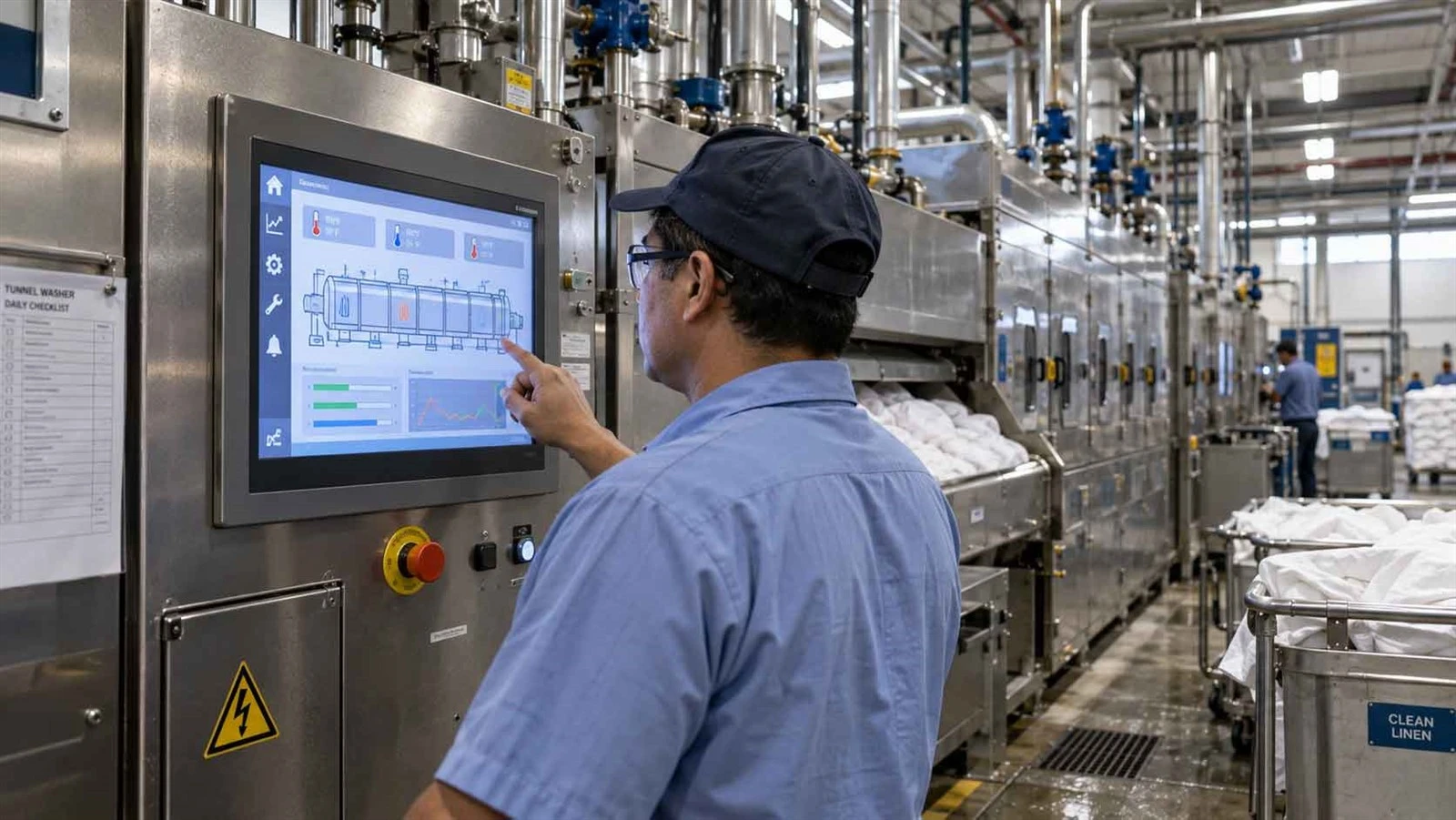
Human-Machine Interface (HMI) technology serves as the central control point for automated industrial systems. Siemens HMI panels, part of the SIMATIC product family, provide operators with a visual window into every part of the wash process. For tunnel washers, this control layer makes chemical injection accurate and batch tracking possible.
What Is Siemens HMI?
Siemens HMI refers to the SIMATIC series of touchscreen control panels and software from Siemens. These industrial-grade displays connect directly to Programmable Logic Controllers (PLCs) that run the machine. Operators use the touchscreen to select programs, adjust settings, view live data, and respond to alarms.
Common models used in laundry equipment include the KTP400 Basic and KTP700 Comfort panels. These units feature 4-inch to 7-inch color touchscreens, Ethernet connectivity, and rugged construction that withstands humidity and temperature swings in laundry rooms. Larger systems may use WinCC Unified software on PC-based stations for more advanced visualization.
Key Features of Siemens SIMATIC HMI for Laundry Systems
Siemens HMI brings several critical capabilities to tunnel washer operation. First, recipe management lets operators store and recall wash programs for different fabric types and soil levels. Each recipe includes temperature setpoints, wash times, and chemical dosage values. Second, real-time trending shows graphs of temperature, water level, and chemical concentration over time. Third, alarm logging records every fault event with timestamps for maintenance analysis.
The interface also supports password-protected access levels. Basic operators can only start and stop programs and view status screens. Supervisors can adjust setpoints and change recipes. Maintenance personnel have full access to diagnostic screens and input/output status. This tiered access prevents accidental changes to critical process parameters.
Chemical Injection Control with Siemens HMI
Chemical injection is one of the most important functions in any industrial laundry system. Too much detergent wastes money and damages fabrics. Too little results in poor cleaning and requires re-washing. Siemens HMI controls deliver the exact amount of each chemical at exactly the right point in the wash cycle.
Precision Dosing for Different Fabric Types
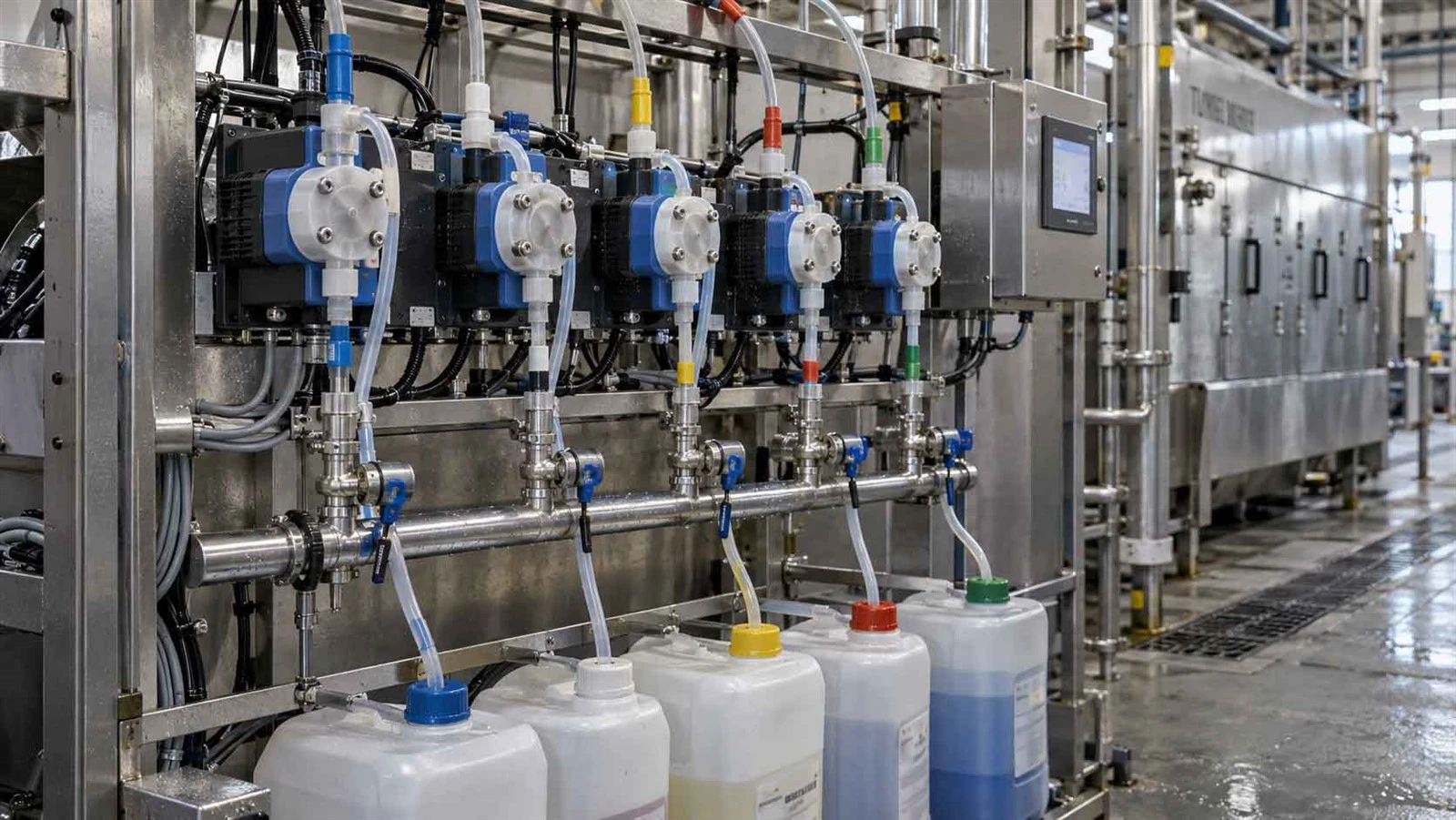
The Siemens HMI system controls multiple chemical injection pumps - typically detergent, alkali, bleach, sour, and softener. Each pump delivers a precise volume based on the current batch weight and selected recipe. Load cells under the inlet section measure the actual linen weight, and the HMI calculates dosage accordingly.
Dosing accuracy reaches ±1 percent of the target volume. For a typical 50-kilogram batch, detergent dosage ranges from 5 to 10 milliliters per kilogram. The HMI adjusts this automatically based on soil level readings from optical sensors in the wash bath. For heavily soiled hospital linens, the system may increase alkali dosage by 30 percent while keeping bleach at standard levels.
Injection timing is also controlled through the HMI. Each chemical enters at the optimal compartment. Detergent goes into the main wash zone. Bleach injects later when temperature reaches the required activation point. Sour and softener add in the final rinse compartments. This staged injection maximizes cleaning performance while minimizing chemical waste.
Cost Savings from Accurate Chemical Delivery
Facilities using manual chemical dosing or older fixed-rate systems often overuse chemicals by 30 to 50 percent. The precise control from Siemens HMI cuts chemical consumption significantly. In typical mid-size laundry processing 12,000 kg per day, annual chemical savings can reach $25,000 to $40,000.
Beyond direct cost savings, accurate dosing extends linen life. Over-dosing causes fiber damage and reduces fabric lifespan by 15 to 25 percent. Proper chemical levels keep fabrics stronger longer, reducing replacement costs. For healthcare facilities, consistent sanitizer concentration also ensures compliance with hygiene standards and infection control requirements.
Batch Tracking Capabilities of Siemens HMI
Batch tracking means following every load of linen from entry to exit through the tunnel washer. Siemens HMI with batch management software gives operators full visibility into each batch's status, location, and process parameters. This traceability matters for quality control, customer billing, and regulatory compliance.
Real-Time Batch Monitoring
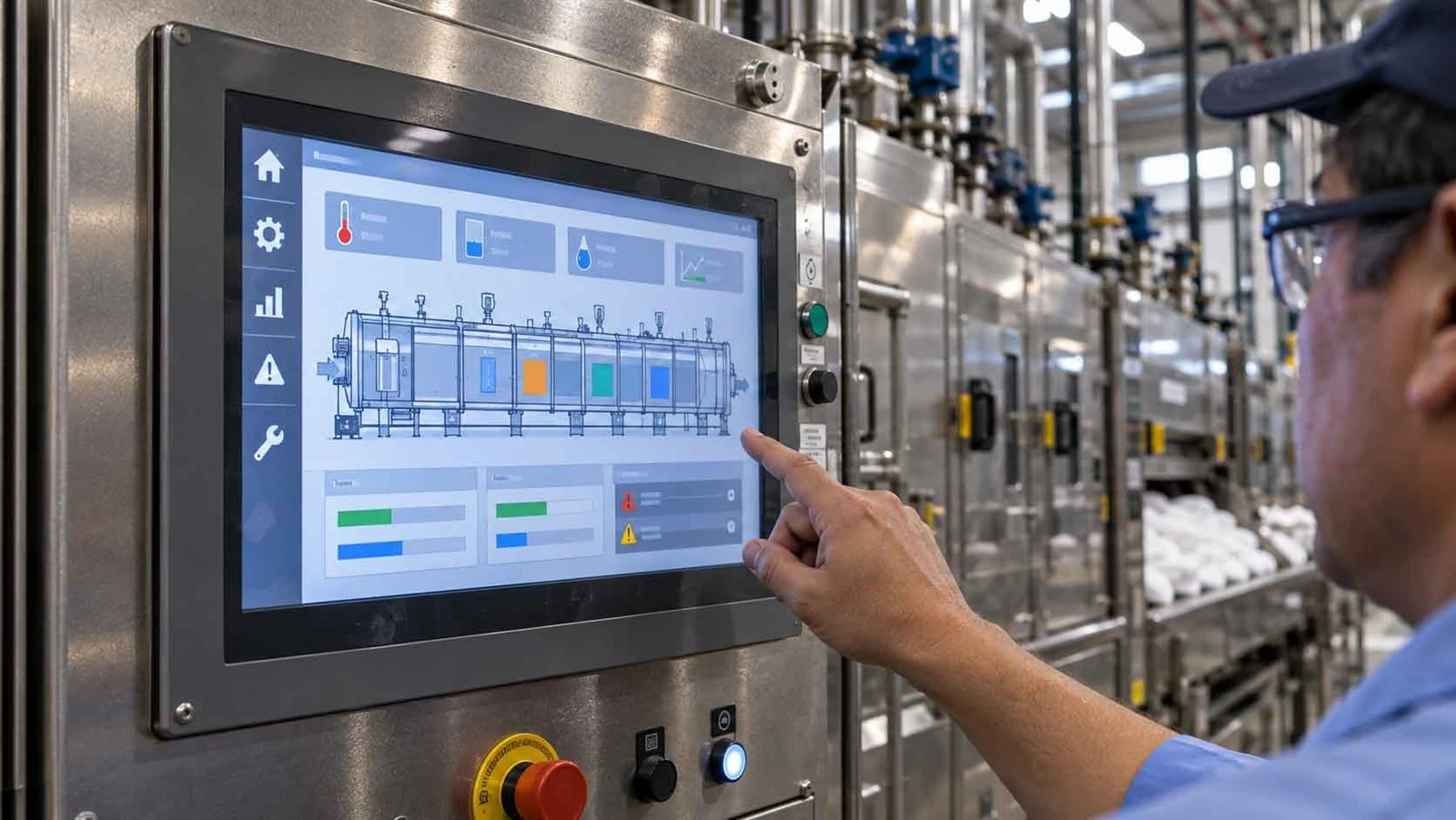
The Siemens HMI displays a graphical view of the tunnel with each batch shown as a colored block moving through the compartments. Operators can see at a glance where each batch is, how long it has been processing, and what stage comes next. Status indicators show temperature, water level, and chemical concentration for each zone.
When a new batch enters the machine, the HMI assigns it a unique batch ID number. The system records the batch weight, fabric type, selected program, and start time. As the batch moves forward, the HMI logs actual process values at each stage. If any parameter falls outside the acceptable range, the system triggers an alarm and flags the batch for review.
Batch monitoring follows the ISA-88 standard for batch process control. This industry-standard structure makes the system familiar to technicians who have worked with other batch manufacturing equipment. It also simplifies integration with larger plant management systems.
Complete Batch Traceability and Reporting
At the end of each wash cycle, the Siemens HMI generates a batch report. This report includes the batch ID, start and end times, actual temperature profile, chemical usage totals, and any alarms that occurred. Reports export to Excel format for easy sharing and storage.
For hospital laundries, batch reports serve as proof that linens received proper sanitization. Healthcare regulators require documentation that wash temperatures reached 71°C (160°F) for the required time. The HMI automatically records this data and produces compliance reports on demand.
Customer billing also benefits from batch tracking. The system counts kilograms processed per customer account and generates usage summaries. Laundry managers can verify that each client's goods received the correct wash formula and track turnaround times.
Real-World Performance: Hospital Laundry Case Study
To show how Siemens HMI improves tunnel washer performance, consider a 300-bed regional hospital laundry facility. This facility processes 14,000 kg of patient linens, surgical drapes, and staff uniforms every day across two 10-hour shifts.
Test Setup and Baseline Measurements
Before upgrading, the facility used a 12-compartment tunnel washer with an older control system and manual chemical adjustment. The maintenance team recorded baseline data over four weeks:
- Average throughput: 875 kg/h
- Chemical cost per kg: $0.128
- Rewash rate due to poor cleaning: 4.2%
- Batch documentation time: 15 minutes per shift
- Downtime from dosing errors: 2.3 hours per week
The upgrade replaced the old control panel with a Siemens KTP700 Comfort HMI connected to a SIMATIC S7-1200 PLC. New chemical injection pumps with flow feedback sensors were installed, and load cells were added at the infeed. The project also included WinCC Basic software for recipe management and batch reporting.
All contact parts in the chemical injection system use 304 stainless steel with 1.2mm wall thickness to resist corrosion from detergents and bleaches. The HMI enclosure meets IP65 rating for protection against water spray in the laundry environment.
Results After Siemens HMI Installation
After three months of operation with the new Siemens HMI system, the facility measured the following improvements:
- Throughput increased to 1,225 kg/h - a 40 percent processing speed improvement
- Chemical cost per kilogram dropped to $0.087 - a 32 percent reduction
- Rewash rate fell to 1.1 percent - a 74 percent decrease
- Batch documentation reduced to 2 minutes per shift - an 87 percent time savings
- Dosing-related downtime dropped to 0.3 hours per week - an 87 percent reduction
The hospital also reported better infection control compliance. Every batch now has a time-stamped temperature record showing proper sanitization. Inspectors can review reports directly from the HMI or print them from the exported Excel files.
Maintenance costs decreased as well. The alarm system detects issues early before they cause breakdowns. Predictive maintenance alerts appear when pump operating hours reach service intervals. Overall maintenance time on the wash system fell by 28 percent in the first six months.
Material and Build Quality
Industrial laundry environments are harsh - wet, humid, and full of chemical vapors. Equipment must withstand these conditions for reliable long-term operation. Siemens HMI panels are built to industrial standards that exceed typical commercial-grade touchscreens.
The front panels have tempered glass that resists scratches and chemical splashes. Housing materials use UV-stabilized plastic that does not degrade under fluorescent lighting and ozone exposure. All connectors are gold-plated to prevent corrosion from humidity.
The chemical injection systems paired with Siemens HMI use 304 stainless steel for all wetted parts. This material resists attack from alkaline detergents, acid sours, and chlorine bleach. Tubing walls measure 1.2mm thick for pressure rating up to 10 bar. Pump diaphragms use EPDM rubber compatible with all common laundry chemicals.
Tunnel washer drums and compartments also use stainless steel construction - typically 316L grade for the highest corrosion resistance. Seals and gaskets are made from Viton or EPDM materials rated for continuous use at 85°C (185°F). These high-quality materials ensure the system maintains accuracy and reliability for 10 to 15 years of service.
ROI and Long-Term Value
Investing in a Siemens HMI upgrade for an industrial laundry tunnel washer delivers measurable returns. Most facilities see payback within 12 to 18 months from combined savings in chemicals, labor, rework, and downtime.
The largest savings come from reduced chemical consumption - typically 25 to 35 percent improvement. Labor savings from automated batch reporting and fewer manual adjustments add another 10 to 15 percent. Lower rewash rates mean less overtime and fewer replacement linen purchases.
Beyond direct cost savings, the system improves quality consistency. Every batch receives the same treatment regardless of which operator is on shift. This reliability builds customer trust and reduces complaints about stained or damaged items.
Future expansion is also simpler with Siemens architecture. The system can add modules for water reuse control, energy monitoring, or connection to enterprise resource planning software. As laundry volumes grow, additional tunnel modules can integrate into the same HMI control system without replacing the entire panel.


