

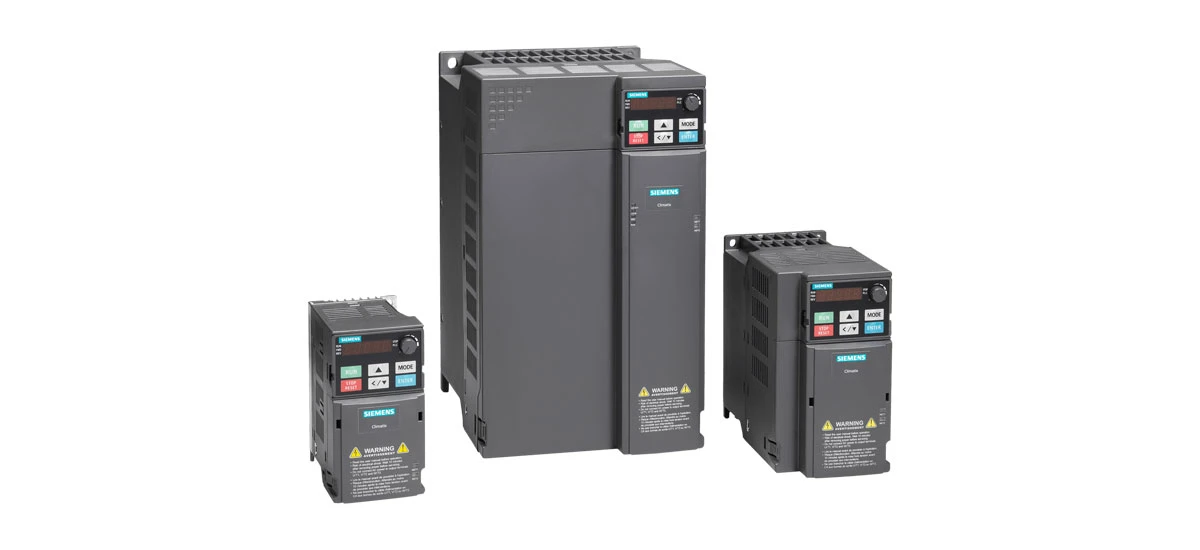
When it comes to running industrial equipment, choosing the right motor control solution is key to saving money and keeping operations smooth. Many business owners and plant managers start with standard starters because they seem cheaper at first. But if you look beyond the initial price tag, you'll find that Siemens VFDs (Variable Frequency Drives) offer a better total cost of ownership (TCO) and higher return on investment (ROI) over time. In this blog, we'll break down what TCO means, how Siemens VFDs compare to standard starters, and how to calculate the ROI of choosing Siemens VFDs for your facility. Whether you're running pumps, fans, or conveyor belts, understanding the true cost of your motor control system will help you make smarter, more profitable decisions.
What Is Total Cost of Ownership (TCO) for Industrial Starters?
Total Cost of Ownership (TCO) is not just the price you pay to buy a motor starter-it's the total amount of money you spend on that starter from the day you buy it until you replace it. This includes three main costs: initial purchase cost, operating costs (like energy and maintenance), and downtime costs when the equipment breaks down. Standard starters might have a lower upfront cost, but they often cost more to run and maintain over their lifetime. On the other hand, Siemens VFDs have a higher initial price, but they cut energy use, reduce maintenance needs, and minimize downtime-all of which lower your overall TCO. To truly compare Siemens VFDs and standard starters, you need to look at the full picture of TCO, not just the first check you write. This is where learning how to calculate Siemens VFD total cost of ownership becomes essential for making informed choices.
Siemens VFD vs. Standard Starters: Key TCO Differences
To understand why Siemens VFDs have a better TCO, let's compare them to standard starters in the three main TCO categories. Siemens VFDs are designed to be efficient, reliable, and easy to maintain-all factors that add up to long-term savings. Standard starters, while simple, lack these features, leading to higher costs over time.
Initial Cost: Siemens VFD vs. Standard Starters
It's true: standard starters (like direct-on-line or soft starters) are cheaper to buy upfront. A basic standard starter can cost a few hundred dollars, while a Siemens VFD typically costs more-sometimes several thousand dollars, depending on the size and model. Siemens offers a range of VFDs, from the entry-level Sinamics V20 (for simple tasks like pumps and fans) to the high-performance Sinamics G series for general industrial use, so there's a Siemens VFD for every budget and application. But here's the thing: the initial cost is just one part of TCO. Siemens VFDs make up for the higher upfront price with massive savings in operating costs and downtime.
Energy Savings: The Biggest TCO Advantage of Siemens VFDs
Electric motors use about 70% of all industrial energy, so cutting motor energy use is one of the best ways to lower operating costs. Standard starters run motors at full speed all the time, even when the equipment doesn't need it. For example, a fan or pump might only need to run at 70% speed to do its job, but a standard starter will still run it at 100%-wasting energy. Siemens VFDs solve this by adjusting the motor's speed to match the exact needs of the equipment. This can cut energy use by 20% to 60%, depending on the application. Imagine a facility that spends $10,000 a year on energy for its motors: a Siemens VFD could save $2,000 to $6,000 every year. Over 5 years, that's $10,000 to $30,000 in savings-far more than the extra upfront cost of the Siemens VFD. Siemens VFD energy savings are one of the top reasons businesses switch from standard starters, as they directly reduce monthly utility bills and improve TCO.
Maintenance Costs: Less Downtime with Siemens VFDs
Standard starters put a lot of stress on motors. When you turn on a standard starter, it sends full voltage to the motor instantly, creating a "surge" that wears down belts, gears, and bearings over time. This means more frequent repairs and replacements-adding to your maintenance costs. Siemens VFDs have a "soft start" feature that gradually ramps up the motor's speed, reducing this stress and extending the life of the motor and its parts. Additionally, Siemens VFDs come with built-in protection features (like overcurrent and overheating protection) that prevent damage to the motor and the drive itself. Regular maintenance for a Siemens VFD is simple: keep it clean and check cooling fans periodically, which is much cheaper than repairing a motor damaged by a standard starter. Siemens VFD maintenance cost is significantly lower than the maintenance cost of standard starters and their associated motor repairs, making it a key contributor to lower TCO.
Lifespan and Long-Term Value of Siemens VFDs
A well-maintained Siemens VFD can last 10 to 25 years, depending on the model and application. Medium-voltage Siemens VFDs, like the Sinamics Perfect Harmony, are built for long lifespans and can operate reliably for decades with proper care. Standard starters, on the other hand, typically last 5 to 10 years, and the motors they control often wear out faster too. This means you'll need to replace standard starters and motors more often, adding to your long-term costs. The long lifespan of Siemens VFDs means you get more value for your money over time-another reason why their TCO is lower. Siemens VFD long-term benefits go beyond just cost savings; they also provide consistent performance and reliability that standard starters can't match.
How to Calculate ROI of Siemens VFDs
Calculating the ROI of a Siemens VFD is simpler than you might think. ROI tells you how long it will take to recoup the extra money you spent on the Siemens VFD and how much profit you'll make after that. The formula for ROI is straightforward, and you can do it with basic math (no advanced calculations needed).
Step 1: Gather Key Numbers
First, you need three numbers:
- The extra upfront cost of the Siemens VFD (subtract the cost of a standard starter from the cost of the Siemens VFD).
- Annual savings from the Siemens VFD (this includes energy savings and maintenance savings).
- The lifespan of the Siemens VFD (usually 10+ years).
For example: Let's say a standard starter costs $500, and a Siemens VFD costs $2,500. The extra upfront cost is $2,000. If the Siemens VFD saves you $1,000 a year in energy and $500 a year in maintenance, your annual savings are $1,500. The Siemens VFD has a 10-year lifespan.
Step 2: Calculate Payback Period
The payback period is how long it takes to get back the extra money you spent on the Siemens VFD. To calculate it, divide the extra upfront cost by your annual savings. Using the example above: $2,000 (extra cost) ÷ $1,500 (annual savings) = 1.33 years. That means you'll recoup your investment in just over 1 year. After that, all the savings are profit.
Step 3: Calculate Total ROI Over the Lifespan
To find the total ROI over the Siemens VFD's lifespan, multiply your annual savings by the number of years, then subtract the extra upfront cost. Using the example: ($1,500 x 10 years) - $2,000 = $13,000. That's a total profit of $13,000 over 10 years-an excellent return on investment. This is why calculating a Siemens VFD vs. standard starters' ROI is so important: it shows that the higher upfront cost of a Siemens VFD is a smart investment, not a waste of money.
Real-World Examples of Siemens VFD ROI
Many businesses have already seen the benefits of switching to Siemens VFDs. For example, a global electric utility with 20 power plants replaced its inefficient mechanical flow controls with Siemens Robicon Perfect Harmony VFDs. The result? Improved fuel efficiency, lower auxiliary power use, and a strong ROI that met the utility's 20-year life cycle goals. Another example: an oil company used Siemens VFDs to upgrade its submersible pumps in Gulf oil wells, regaining productivity and reducing long-term costs. Even small businesses benefit: a local manufacturing plant switched to Siemens VFDs for its conveyor belts and saw a 30% drop in energy bills, with a payback period of just 8 months. These real-world examples prove that Siemens VFDs deliver on their promise of lower TCO and higher ROI.
Why Siemens VFD Is Worth the Investment
Siemens is a global leader in VFD technology, with a wide range of products to fit every industrial application-from small fans to giant mill drives. Siemens VFDs are reliable, efficient, and backed by a strong support network, which means you can count on them to keep your operations running smoothly. They also integrate seamlessly with Siemens' broader automation ecosystem, making them easy to add to your existing systems. When you choose a Siemens VFD, you're not just buying a piece of equipment-you're investing in a solution that will save you money, reduce downtime, and improve your bottom line for years to come. Unlike standard starters, which only offer basic motor control, Siemens VFDs provide precise speed control, energy savings, and long-term reliability that make them the better choice for any business looking to optimize its operations.
Conclusion
When it comes to motor control, the initial cost of a standard starter might seem appealing, but it's important to look at the big picture. Total Cost of Ownership (TCO) and Return on Investment (ROI) are the true measures of a motor control solution's value-and Siemens VFDs outperform standard starters in both areas. Siemens VFDs save energy, reduce maintenance costs, last longer, and minimize downtime, all of which lower your TCO and deliver a strong ROI. Whether you're running a small facility or a large industrial plant, calculating the ROI of a Siemens VFD will show you that the extra upfront cost is well worth it. By choosing Siemens VFDs over standard starters, you're making a smart investment in your business's efficiency, reliability, and long-term success. So, if you're ready to save money and improve your operations, it's time to consider Siemens VFDs as your go-to motor control solution.


