


As a trusted supplier of Omron HMIs, I often receive inquiries about the data transfer speeds of Omron HMI communication. Understanding these speeds is crucial for various industrial applications, as it directly impacts the efficiency and responsiveness of control systems. In this blog, I will delve into the data transfer speeds of Omron HMIs, exploring the factors that influence them and providing real - world examples.
Understanding Data Transfer Speeds in Omron HMIs
Data transfer speed, measured in bits per second (bps), bytes per second (Bps), or megabits per second (Mbps), represents how quickly data can be transmitted between the HMI and other devices in an industrial network. Omron offers a wide range of HMIs, each with different communication interfaces and capabilities, which in turn affect the data transfer speeds.
Communication Interfaces and Their Speeds
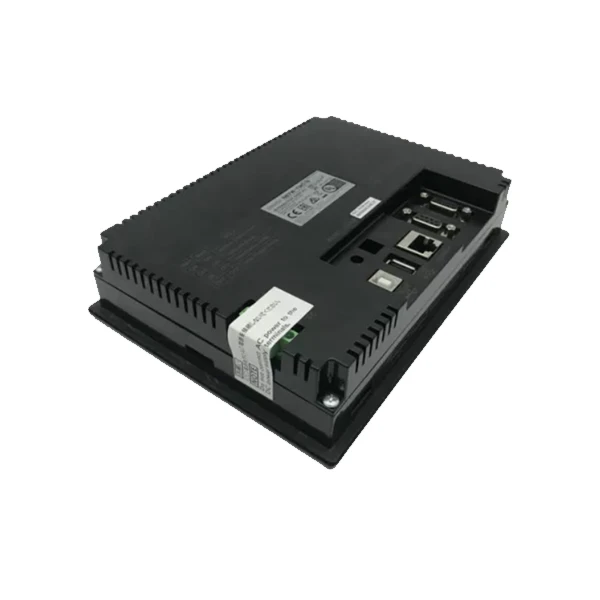
Omron HMIs support multiple communication interfaces, including Ethernet, serial (RS - 232, RS - 422, RS - 485), and USB. Each interface has its own typical data transfer speeds:
-
Ethernet: Ethernet is the fastest and most widely used communication interface in modern industrial automation. Omron HMIs with Ethernet support can achieve high - speed data transfer. For example, standard Ethernet interfaces typically operate at 10 Mbps or 100 Mbps, while Gigabit Ethernet (1000 Mbps) is also available in some advanced models. The high - speed nature of Ethernet makes it suitable for applications that require real - time data exchange, such as large - scale process control systems and high - speed machine monitoring.
-
Serial Communication: Serial communication interfaces are still commonly used in industrial settings, especially for legacy systems or applications where long - distance communication is required. RS - 232 is a simple serial interface with relatively low data transfer speeds, typically ranging from 300 bps to 115200 bps. RS - 422 and RS - 485, on the other hand, support higher speeds and longer distances. RS - 422 can achieve speeds up to 10 Mbps over short distances, while RS - 485 can support speeds up to 10 Mbps at short distances and is often used for multi - drop networks, with typical speeds in industrial applications ranging from 9600 bps to 115200 bps.
-
USB: USB interfaces provide a convenient way to transfer data between the HMI and other devices, such as external storage or programming devices. USB 2.0, which is commonly found in Omron HMIs, has a maximum data transfer speed of 480 Mbps, while USB 3.0 can reach speeds up to 5 Gbps. However, the actual data transfer speed in an HMI application may be limited by the device's internal processing capabilities.
Factors Affecting Data Transfer Speeds
Several factors can affect the actual data transfer speeds of Omron HMIs:
- Network Load: In a shared network environment, the amount of traffic on the network can significantly impact data transfer speeds. If the network is congested with other devices transferring large amounts of data, the HMI may experience slower transfer speeds.
- Device Configuration: The configuration of the HMI and the connected devices can also affect data transfer speeds. For example, setting the wrong baud rate in a serial communication link can lead to data transfer errors or reduced speeds.
- Data Volume: The size of the data being transferred plays a role in determining the transfer speed. Larger data packets take longer to transfer, especially if the network has limited bandwidth.
Data Transfer Speeds of Specific Omron HMI Models
Let's take a look at the data transfer speeds of some specific Omron HMI models:
-
Omron NS10 - TV00B - V2 HMI: The Omron NS10 - TV00B - V2 HMI is a popular model that supports Ethernet and serial communication interfaces. With its Ethernet interface, it can achieve data transfer speeds of up to 100 Mbps, making it suitable for applications that require fast data exchange. The serial interfaces (RS - 232, RS - 422, RS - 485) offer a range of speeds, allowing for flexibility in different industrial environments.
-
Omron NB5Q - TW00B: The Omron NB5Q - TW00B is another well - known HMI model. It supports Ethernet and serial communication, with Ethernet speeds up to 100 Mbps. The serial interfaces provide reliable data transfer at speeds suitable for various industrial control applications, ensuring smooth operation in different scenarios.
-
NB7W - TW01B Omron NB Series Touch Screen HMI: The NB7W - TW01B Omron NB Series Touch Screen HMI is designed for advanced industrial applications. It offers high - speed Ethernet communication, enabling rapid data transfer between the HMI and other devices in the network. This model's fast data transfer capabilities make it ideal for complex control systems that require real - time data monitoring and control.
Real - World Applications and Data Transfer Speeds
The data transfer speeds of Omron HMIs are critical in various real - world industrial applications:
-
Manufacturing Automation: In manufacturing plants, HMIs are used to monitor and control production lines. High - speed data transfer is essential for real - time monitoring of machine status, quality control, and production scheduling. For example, in a high - speed assembly line, the HMI needs to quickly receive data from sensors and send control commands to actuators to ensure smooth operation.
-
Process Control: In process industries such as chemical, pharmaceutical, and food processing, HMIs are used to control and monitor complex processes. The ability to transfer large amounts of data quickly is crucial for maintaining process stability and safety. For instance, in a chemical reactor, the HMI needs to continuously receive data on temperature, pressure, and flow rates and adjust the control parameters accordingly.
-
Building Automation: In building automation systems, HMIs are used to control and monitor various building systems, such as HVAC, lighting, and security. Fast data transfer speeds ensure that the HMI can respond quickly to changes in environmental conditions and user commands, providing a comfortable and efficient building environment.
Conclusion
In conclusion, the data transfer speeds of Omron HMIs vary depending on the communication interface, device configuration, and other factors. Understanding these speeds is essential for selecting the right HMI for your industrial application. Whether you need high - speed Ethernet communication for real - time data exchange or reliable serial communication for legacy systems, Omron offers a wide range of HMIs to meet your needs.
If you are interested in learning more about Omron HMIs and their data transfer speeds, or if you are looking to purchase Omron HMIs for your industrial application, please feel free to contact us for further discussion and procurement negotiation. We are committed to providing you with the best solutions and support.
References
- Omron HMI product manuals and technical documentation.
- Industrial automation textbooks and industry standards related to communication protocols.


