


Hey everyone! As a PLC supplier, I often get asked about the role of a Programmable Logic Controller (PLC) in a Distributed Control System (DCS). So, I thought I'd write this blog to share my insights.
First off, let's briefly understand what a DCS is. A DCS is a computerised control system used in industrial processes. It's designed to control large and complex systems, like power plants, refineries, and chemical factories. The DCS distributes control functions among multiple controllers at different locations, which communicate with each other through a network.
Now, what about PLCs? A PLC is a specialised computer used for automation of industrial processes. It can read input signals from sensors, make decisions based on a pre - programmed logic, and then send output signals to control actuators. PLCs are known for their reliability, flexibility, and ease of programming.
The Role of PLCs in a DCS System
1. Local Control
One of the primary roles of a PLC in a DCS is to provide local control. In large industrial facilities, there are many individual processes or subsystems that need to be controlled independently. PLCs are perfect for this job. They can be installed right at the location of the process they're controlling. For example, in a chemical plant, a PLC can be used to control the temperature and pressure of a specific reaction vessel. This local control reduces the need for long cable runs and minimises the load on the central DCS controllers.
Let me tell you about some of the cool PLCs we offer. The Omron CJ2M - CPU14 is a great choice for local control. It's compact, powerful, and has a high - speed processing capability. It can handle various input and output signals, making it suitable for a wide range of industrial applications.
2. Data Acquisition
PLCs also play a crucial role in data acquisition within a DCS. They are connected to numerous sensors throughout the industrial facility. These sensors measure various parameters such as temperature, pressure, flow rate, and level. The PLC reads the data from these sensors and then sends it to the DCS for further processing and analysis.
Take the ABB 2TLA020070R4700 PLC for example. It has excellent analog and digital input capabilities, allowing it to accurately collect data from different types of sensors. This data is essential for the DCS to monitor the process, detect any anomalies, and make informed control decisions.
3. Signal Conditioning
Before the data from sensors can be used by the DCS, it often needs to be conditioned. PLCs can perform signal conditioning tasks such as amplification, filtering, and conversion. This ensures that the data sent to the DCS is accurate and reliable. For instance, if a sensor output is a very low - level electrical signal, the PLC can amplify it to a level that can be easily processed by the DCS.
The Siemens 6ED1052 - 1MD08 - 0BA2 LOGO is a versatile PLC that can handle signal conditioning effectively. It has built - in features that can adjust the input signals according to the requirements of the DCS.
4. Backup and Redundancy
In a DCS, reliability is of utmost importance. PLCs can serve as backup systems. In case the central DCS controller fails, the PLCs can take over the basic control functions to prevent a complete shutdown of the process. Some PLCs also support redundant configurations, where multiple PLCs work together to ensure continuous operation.
The Schneider TWDLCAA24DRF Twido Controller can be configured in a redundant setup. This provides an extra layer of protection for the industrial process, ensuring that production can continue even in the face of hardware failures.
5. Integration with Other Devices
PLCs can easily integrate with other devices in the DCS. They can communicate with human - machine interfaces (HMIs), variable frequency drives (VFDs), and other control devices. This integration allows for seamless operation of the entire system. For example, an operator can use an HMI to monitor and control the PLC, which in turn controls the industrial process.
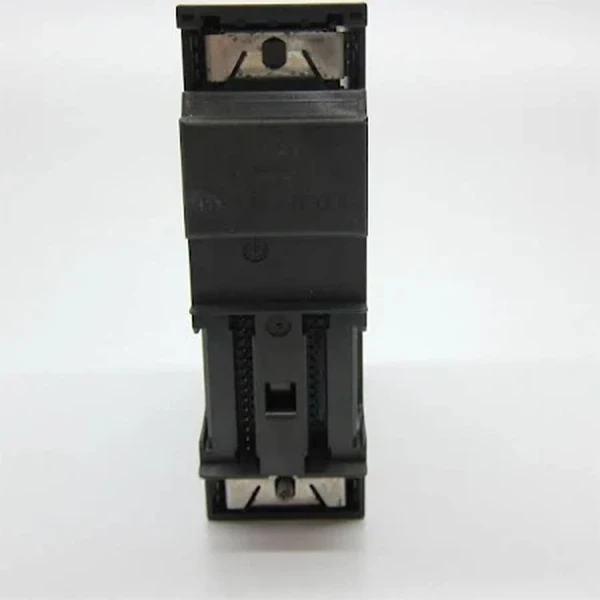
The Simatic S7 - 300 CPU 314 has excellent communication capabilities. It can communicate with a wide range of devices using different protocols, making it a great choice for integrating into a complex DCS.

Advantages of Using PLCs in a DCS
- Cost - effectiveness: PLCs are relatively inexpensive compared to some of the high - end DCS controllers. Using PLCs for local control and data acquisition can reduce the overall cost of the DCS.
- Flexibility: PLCs can be easily programmed and reprogrammed. This allows for quick changes to the control logic as the industrial process evolves.
- Reliability: PLCs are designed to operate in harsh industrial environments. They are resistant to electrical noise, vibration, and temperature variations, ensuring reliable operation.
Conclusion
In a nutshell, PLCs play a vital role in a DCS system. They provide local control, acquire and condition data, offer backup and redundancy, and integrate with other devices. Whether you're running a small - scale industrial operation or a large - scale manufacturing plant, the combination of PLCs and a DCS can significantly improve the efficiency, reliability, and safety of your processes.
If you're interested in learning more about our PLC products or have any questions regarding their use in a DCS system, feel free to reach out. We're here to help you find the best solution for your industrial automation needs. Contact us to start a procurement discussion and take your industrial process to the next level!
References
- "Industrial Automation: Principles and Applications" by Thomas J. Gorman
- "Programmable Logic Controllers" by Timothy W. Miller
- "Distributed Control Systems: Design and Application" by David A. Mellichamp and Richard H. Galán


