


As a Siemens HMI supplier, I often encounter inquiries from customers regarding the storage capacity of Siemens HMIs. In this blog post, I will delve into the details of the storage capacity of various Siemens HMI models, providing you with a comprehensive understanding to help you make informed decisions for your industrial automation needs.
Understanding the Importance of Storage Capacity in HMIs
Human - Machine Interfaces (HMIs) are an integral part of industrial automation systems. They serve as the communication bridge between operators and machines, allowing for real - time monitoring, control, and data logging. The storage capacity of an HMI is crucial as it determines how much data can be stored on the device. This data can include historical process values, alarm logs, user operation records, and more. A larger storage capacity enables longer - term data retention, which is valuable for troubleshooting, process optimization, and compliance with industry regulations.
Storage Capacity of Popular Siemens HMI Models
SIMATIC HMI KTP1200 Basic DP
The SIMATIC HMI KTP1200 Basic DP is a well - known Siemens HMI model. It comes with a built - in storage solution that offers sufficient space for typical industrial applications. The device has a flash memory storage capacity that can handle the storage of various types of data, such as screen images, user programs, and historical data.
The flash memory in the KTP1200 Basic DP provides a reliable and non - volatile storage option. This means that the data stored on it will not be lost even in the event of a power outage. For most small to medium - sized industrial processes, the storage capacity of the KTP1200 Basic DP is more than adequate. It allows for the storage of detailed process data over a reasonable period, enabling operators to analyze trends and identify potential issues.
Siemens 6AV2124 0QC02 0AX1
The Siemens 6AV2124 0QC02 0AX1 is another Siemens HMI that offers a specific storage capacity. This model is designed to meet the requirements of more complex industrial applications. It typically has a larger storage capacity compared to some of the basic models.
The increased storage in the 6AV2124 0QC02 0AX1 allows for the storage of more extensive historical data, which is beneficial for in - depth process analysis. It can also store more complex user - defined programs and graphics, enhancing the functionality of the HMI. With its higher storage capacity, this HMI is suitable for industries where long - term data retention and detailed process monitoring are essential, such as in the chemical or pharmaceutical industries.
Siemens 6av6644 - 0ab01 - 2ax0 Simatic Mp 377
The Siemens 6av6644 - 0ab01 - 2ax0 Simatic Mp 377 is a high - end Siemens HMI. It is equipped with a relatively large storage capacity to support the most demanding industrial applications. This model is often used in large - scale manufacturing plants, power generation facilities, and other industrial settings where a vast amount of data needs to be stored and processed.
The Simatic Mp 377's storage capacity enables it to handle high - frequency data logging, complex visualization tasks, and the storage of large - scale user programs. It can store years of historical data, which is invaluable for long - term performance analysis and strategic decision - making. The large storage also allows for the integration of advanced features such as data encryption and remote access, enhancing the security and usability of the HMI.
Factors Affecting Storage Capacity Utilization
While the storage capacity of Siemens HMIs is a crucial factor, it is also important to understand the factors that can affect its utilization.
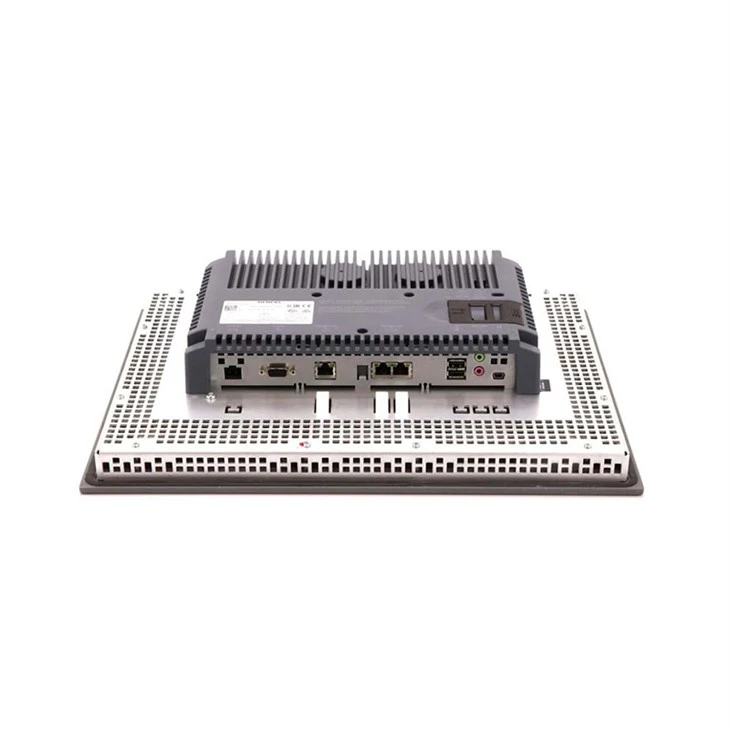

Data Logging Frequency
The frequency at which data is logged has a significant impact on storage capacity. If data is logged at a high frequency, for example, every second, the storage space will be consumed much more quickly compared to a lower logging frequency, such as every minute or hour. Operators need to carefully consider the importance of real - time data and balance it with the available storage capacity.
Data Types
Different types of data require different amounts of storage space. For example, storing high - resolution graphics or video files will consume more storage compared to simple numerical data. When designing an HMI system, it is essential to determine the types of data that need to be stored and plan the storage capacity accordingly.
User Programs and Applications
The complexity of user programs and applications running on the HMI also affects storage utilization. More complex programs with advanced functions and a large number of screens will require more storage space. It is important to optimize the user programs to ensure efficient use of the available storage.
Maximizing Storage Capacity
To make the most of the storage capacity of Siemens HMIs, there are several strategies that can be employed.
Data Compression
Using data compression techniques can significantly reduce the amount of storage space required for data storage. Siemens HMIs support various data compression algorithms that can compress data without significant loss of information. This allows for more data to be stored in the available storage space.
Data Archiving
Implementing a data archiving strategy is another effective way to manage storage capacity. Data that is no longer needed for real - time monitoring can be archived to external storage devices, such as hard drives or network - attached storage (NAS). This frees up space on the HMI for new data.
Regular Maintenance
Regularly deleting unnecessary data, such as old alarm logs or temporary files, can help keep the storage space clean and ensure efficient operation of the HMI. It is also important to perform regular system updates to ensure that the HMI software is optimized for storage utilization.
Conclusion
The storage capacity of Siemens HMIs varies depending on the model and is designed to meet the diverse needs of industrial applications. Whether you are using a basic model like the SIMATIC HMI KTP1200 Basic DP for small - scale processes or a high - end model like the Siemens 6av6644 - 0ab01 - 2ax0 Simatic Mp 377 for large - scale industrial facilities, understanding the storage capacity and how to optimize its use is essential.
If you are in the market for a Siemens HMI and need to determine the right storage capacity for your application, I am here to help. As a Siemens HMI supplier, I have the expertise and experience to guide you through the selection process. Contact me to discuss your specific requirements and start a procurement negotiation. I look forward to working with you to find the perfect Siemens HMI solution for your industrial automation needs.
References
- Siemens official documentation on HMI products
- Industrial automation industry reports on HMI usage and storage requirements


