


Hey there! As a supplier of Allen - Bradley VFDs, I've had my fair share of customers asking about how to set the frequency resolution on these drives. It's a crucial aspect that can really impact the performance of your equipment, so I'm gonna break it down for you in this blog.
First off, let's understand what frequency resolution is. Frequency resolution refers to the smallest increment by which the output frequency of the VFD can be adjusted. It's like the "fine - tuning knob" for your motor's speed. A higher frequency resolution allows for more precise control over the motor's speed, which is super important in applications where accuracy is key, like in some industrial automation processes.
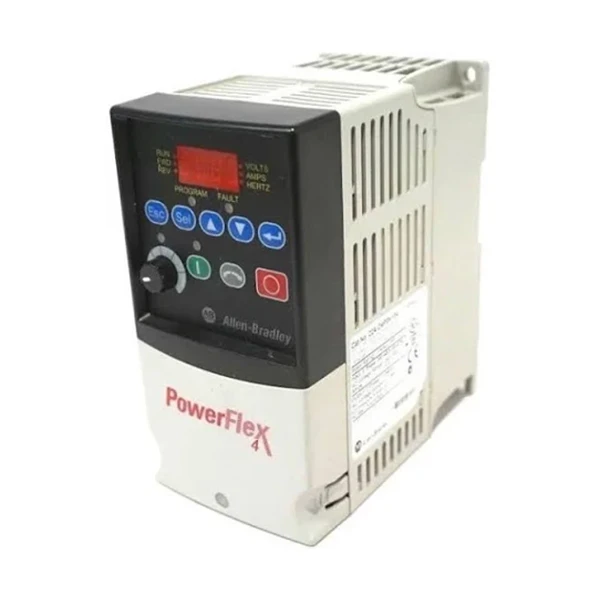

Now, different models of Allen - Bradley VFDs might have slightly different ways of setting the frequency resolution. Let's take a look at a few popular models.
Allen - Bradley 22C - D045A103
The Allen - Bradley 22C - D045A103 is a well - known VFD in the market. To set the frequency resolution on this model, you'll first need to access the drive's parameter menu. Usually, you can do this by pressing the "Menu" or "Setup" button on the drive's keypad.
Once you're in the menu, look for the parameters related to frequency settings. In most cases, the frequency resolution parameter might be labeled something like "Freq Res" or "Frequency Resolution". You'll see a range of values available for selection. The default value might be set to a certain increment, but you can change it according to your needs. For example, if you need very precise speed control, you can select a smaller increment value.
After you've selected the desired frequency resolution, make sure to save the changes. On the 22C - D045A103, you can usually do this by pressing the "Enter" or "Save" button. It's always a good idea to double - check the parameter values after saving to make sure they've been set correctly.
Allen Bradley 22A - D4P0N104
The Allen Bradley 22A - D4P0N104 is another great option. Similar to the previous model, accessing the parameter menu is the first step. On this drive, the process might be a bit different in terms of the keypad layout, but the general concept remains the same.
Navigate through the menu using the arrow keys on the keypad until you find the frequency resolution parameter. It might be grouped with other frequency - related parameters. Once you've located it, you can adjust the value. Keep in mind that some values might be restricted based on the drive's capabilities, so if you try to select an invalid value, the drive will usually give you an error message.
After setting the frequency resolution, save the changes. You can then test the drive to see if the new frequency resolution setting is working as expected. You can do this by running the motor at different speeds and observing how smoothly it operates.
Allen - Bradley 22B - D010N104
The Allen - Bradley 22B - D010N104 also follows a similar process. Access the parameter menu, find the frequency resolution parameter, and make your adjustments.
One thing to note is that when you're setting the frequency resolution, you should also consider other factors. For example, the load on the motor can affect how the drive responds to different frequency settings. If you have a heavy - load application, you might need to be more careful when adjusting the frequency resolution to avoid overloading the motor or causing it to operate inefficiently.
Another important consideration is the input signal to the VFD. If you're using an analog input signal, like a 4 - 20 mA or 0 - 10 V signal, the resolution of the input signal can also impact the overall frequency control. Make sure that the input signal has enough resolution to support the frequency resolution you've set on the VFD.
Here are some general tips for setting the frequency resolution on Allen - Bradley VFDs:
- Read the manual: The user manual that comes with the VFD is your best friend. It has detailed information about all the parameters, including the frequency resolution. Make sure to read it thoroughly before making any changes.
- Test in a safe environment: Before implementing the new frequency resolution setting in a production environment, test it in a safe and controlled setting. This way, you can identify any potential issues and make adjustments as needed.
- Keep records: It's a good idea to keep a record of the parameter settings you've made, including the frequency resolution. This can be helpful for troubleshooting in the future or if you need to make similar adjustments on other drives.
If you're still having trouble setting the frequency resolution on your Allen - Bradley VFD, don't worry. As a supplier, I'm here to help. Whether you need more detailed instructions, technical support, or advice on which VFD model is best for your application, just reach out. We can have a chat about your specific requirements and work together to find the best solution.
In conclusion, setting the frequency resolution on an Allen - Bradley VFD is an important task that can significantly improve the performance of your motor. By following the steps I've outlined above and considering the factors I've mentioned, you should be able to set the frequency resolution accurately and effectively.
If you're interested in purchasing Allen - Bradley VFDs or need more information about our products, feel free to get in touch. We're always happy to have a discussion about your needs and help you make the right choice for your business.
References
- Allen - Bradley VFD User Manuals
- Industrial Automation Technical Guides


