


Hey there! As a supplier of Siemens VFDs (Variable Frequency Drives), I often get asked about the functions of digital input/output on these drives. So, I thought I'd write this blog to shed some light on this topic.
First off, let's understand what digital input/output (I/O) is. Digital I/O refers to the signals that are either on or off, like a light switch. In the context of Siemens VFDs, these signals play a crucial role in controlling and monitoring the drive's operation.
Digital Inputs on Siemens VFDs
Digital inputs are used to send signals to the VFD to control its operation. They can be used for a variety of functions, such as starting and stopping the drive, changing the speed setpoint, and enabling certain operating modes.
One of the most common uses of digital inputs is to start and stop the drive. You can connect a push-button switch to a digital input on the VFD, and when the button is pressed, the drive will start running. Similarly, when the button is released, the drive will stop. This is a simple and effective way to control the drive's operation manually.
Another important function of digital inputs is to change the speed setpoint. You can use a set of digital inputs to select different speed values. For example, you can assign one input to select a low speed, another input to select a medium speed, and a third input to select a high speed. When an input is activated, the VFD will change the speed to the corresponding value.
Digital inputs can also be used to enable certain operating modes. For instance, you can use an input to enable a jog mode, which allows the drive to run at a slow speed for a short period of time. This is useful for testing and aligning the motor and the driven equipment.
Digital Outputs on Siemens VFDs
Digital outputs, on the other hand, are used to send signals from the VFD to external devices. They can be used to indicate the status of the drive, such as whether it is running, stopped, or in an error state.
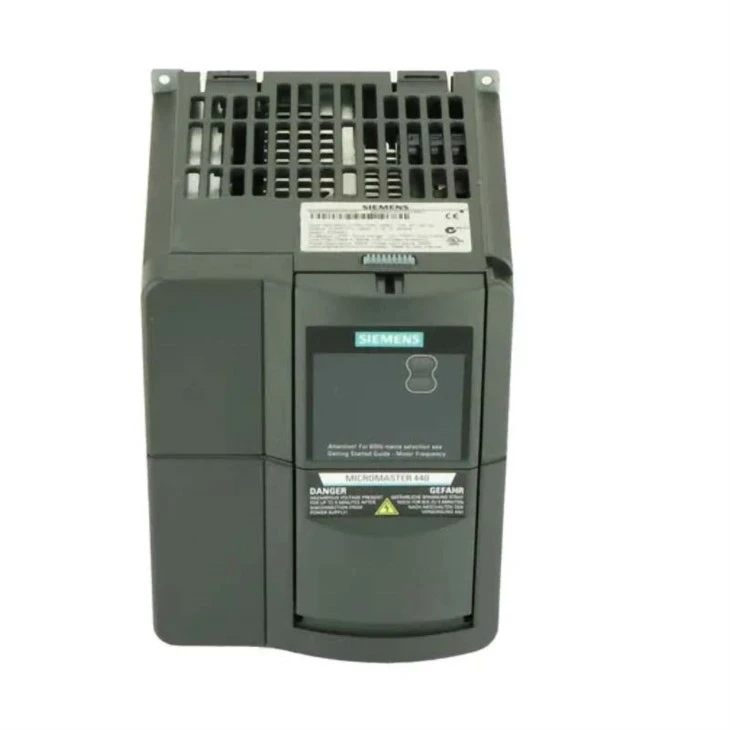

One of the most common uses of digital outputs is to indicate the running status of the drive. You can connect an LED or a buzzer to a digital output on the VFD, and when the drive is running, the LED will light up or the buzzer will sound. This provides a visual or audible indication of the drive's operation.
Digital outputs can also be used to indicate an error state. When the VFD detects an error, such as an overcurrent or an overvoltage condition, it can send a signal to a digital output. You can connect this output to an alarm device, such as a horn or a strobe light, to alert the operator.
In addition, digital outputs can be used to control external devices based on the drive's operation. For example, you can use an output to control a relay, which can then be used to turn on or off a heater or a fan. This allows you to integrate the VFD with other equipment in the system.
Examples of Digital I/O Applications
Let's take a look at some real-world examples of how digital I/O is used in Siemens VFDs.
Example 1: Conveyor Belt System
In a conveyor belt system, you can use digital inputs to control the start and stop of the conveyor. You can connect a start button and a stop button to two digital inputs on the VFD. When the start button is pressed, the VFD will start the conveyor, and when the stop button is pressed, the conveyor will stop.
You can also use digital outputs to indicate the status of the conveyor. For example, you can connect an LED to a digital output that indicates whether the conveyor is running or stopped. This provides a visual indication to the operator.
Example 2: Pumping System
In a pumping system, digital inputs can be used to control the speed of the pump. You can use a set of digital inputs to select different speed values based on the demand for water. For example, if the demand is low, you can select a low speed, and if the demand is high, you can select a high speed.
Digital outputs can be used to indicate the status of the pump. You can connect an alarm device to a digital output that indicates when the pump is in an error state, such as when there is a low water level or a motor overload.
Benefits of Using Digital I/O on Siemens VFDs
Using digital I/O on Siemens VFDs offers several benefits.
Flexibility: Digital I/O allows you to customize the control and monitoring of the VFD according to your specific requirements. You can easily change the functions assigned to the inputs and outputs, and you can also add or remove inputs and outputs as needed.
Reliability: Digital signals are less susceptible to noise and interference compared to analog signals. This makes the control and monitoring of the VFD more reliable, especially in industrial environments where there is a lot of electrical noise.
Cost-Effectiveness: Digital I/O is generally more cost-effective than analog I/O. You can use simple and inexpensive switches and relays to control the VFD, which reduces the overall cost of the system.
Recommended Siemens VFD Models
If you're looking for a Siemens VFD with digital I/O capabilities, here are some recommended models:
- Siemens 6ES6440-2AD23-0BA1: This is a popular VFD model that offers a wide range of digital inputs and outputs. It is suitable for a variety of applications, including conveyor belts, pumps, and fans.
- Siemens 6SL3130-6TE23-6AA3: This VFD model is known for its high performance and reliability. It has a large number of digital inputs and outputs, and it can be used in complex industrial applications.
- Siemens 6SL3040-1MA01-0AA0 SINAMICS S120: This is a advanced VFD model that offers a high level of flexibility and functionality. It has a wide range of digital I/O options, and it can be easily integrated with other automation systems.
Conclusion
In conclusion, digital input/output is an important feature of Siemens VFDs. It allows you to control and monitor the drive's operation effectively, and it offers several benefits such as flexibility, reliability, and cost-effectiveness. If you're in the market for a Siemens VFD, make sure to consider the digital I/O capabilities of the model you're interested in.
If you have any questions or need more information about Siemens VFDs and their digital I/O functions, feel free to reach out to us. We're here to help you find the right solution for your application. Contact us today to start a procurement discussion and get the best deal on Siemens VFDs.
References
- Siemens VFD User Manuals
- Industrial Automation Handbook


