


As a supplier of Omron PLC modules, I often encounter inquiries from customers regarding the resolution of analog input and output in these modules. Understanding this concept is crucial for anyone working with industrial automation, as it directly impacts the accuracy and precision of control systems. In this blog post, I'll delve into what the resolution of analog input and output means for Omron PLC modules, how it affects performance, and why it matters in real-world applications.
What is Resolution in Analog Input and Output?
Before we dive into the specifics of Omron PLC modules, let's clarify what we mean by "resolution" in the context of analog input and output. Resolution refers to the smallest change in the physical quantity (such as voltage, current, temperature, or pressure) that the PLC module can detect or produce. It is typically expressed in bits, which determines the number of discrete steps the module can represent within its full-scale range.
For analog input modules, resolution indicates the smallest change in the input signal that the module can convert into a digital value. A higher resolution means that the module can detect smaller changes in the input signal, providing more precise measurements. For example, a 12-bit analog input module can represent 4096 (2^12) discrete levels within its full-scale range, while a 16-bit module can represent 65,536 (2^16) levels. This additional granularity allows for more accurate monitoring of process variables.
On the other hand, analog output modules use resolution to determine the smallest change in the output signal that they can generate. A higher resolution output module can produce more precise control signals, enabling finer adjustments to actuators such as valves, motors, or heaters. This is particularly important in applications where precise control of a process variable is required, such as in chemical manufacturing or temperature control systems.
Resolution in Omron PLC Modules
Omron offers a wide range of PLC modules with different analog input and output resolutions to meet the diverse needs of industrial applications. The resolution of these modules can vary depending on the specific model and series. For instance, some of the older models may have a 12-bit resolution, while newer and more advanced modules can offer up to 16-bit or even higher resolutions.
Let's take a closer look at how resolution affects the performance of Omron PLC modules in real-world scenarios. Consider an application where you need to measure the temperature of a chemical process using an analog input module. If you use a 12-bit module with a full-scale range of 0 to 100 degrees Celsius, each discrete step represents approximately 0.024 degrees Celsius (100 / 4096). This means that the module can detect temperature changes as small as 0.024 degrees Celsius, providing a relatively high level of accuracy.
However, if you require even more precise temperature measurements, you might opt for a 16-bit module. With a 16-bit resolution, each discrete step represents approximately 0.0015 degrees Celsius (100 / 65536), allowing for much finer temperature monitoring. This increased resolution can be critical in applications where small temperature variations can have a significant impact on the quality or safety of the process.
Similarly, for analog output modules, the resolution determines the precision of the control signals that can be sent to actuators. For example, in a motor control application, a higher resolution output module can provide smoother and more accurate speed control, reducing the risk of overshoot or instability in the system.

Choosing the Right Resolution for Your Application
When selecting an Omron PLC module for your application, it's important to consider the required resolution based on the specific needs of your process. Here are some factors to keep in mind:
- Accuracy Requirements: Determine the level of accuracy needed for your application. If precise measurements or control are critical, a higher resolution module may be necessary.
- Full-Scale Range: Consider the full-scale range of the input or output signal. A wider range may require a higher resolution module to maintain the desired level of accuracy.
- Cost vs. Performance: Higher resolution modules typically come at a higher cost. Evaluate the cost-benefit ratio to determine if the additional resolution is worth the investment for your application.
- Compatibility: Ensure that the selected module is compatible with your existing PLC system and other components in your control network.
Examples of Omron PLC Modules with Different Resolutions
To illustrate the range of options available, let's take a look at some specific Omron PLC modules and their resolutions:
- Omron CP1W-CIF01 RS232 Module: This module is designed for serial communication and may not have analog input or output capabilities. However, it serves as an example of the diverse range of Omron PLC modules available for different applications.
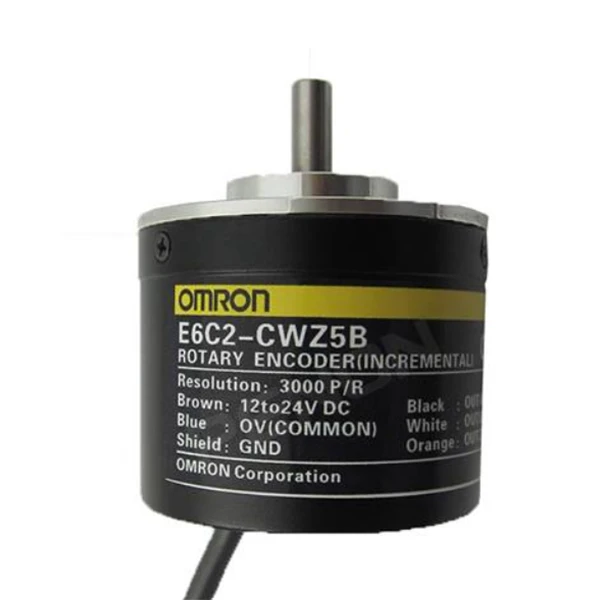
- Omron E6C2-CWZ5B 360P/R 2M: This is a rotary encoder that can be used in conjunction with a PLC to measure rotational speed or position. While not a traditional analog input or output module, it demonstrates Omron's expertise in providing high-quality sensors for industrial automation.
- G9SA-321-T075 AC/DC24 Omron: This is a relay module that can be used for switching electrical loads. Although it doesn't involve analog signals, it showcases Omron's comprehensive product portfolio for industrial control applications.
Conclusion
In conclusion, the resolution of analog input and output in Omron PLC modules plays a crucial role in the accuracy and precision of industrial control systems. A higher resolution allows for more precise measurements and control, enabling better process optimization and quality assurance. When selecting an Omron PLC module, it's important to carefully consider the resolution based on the specific requirements of your application.
If you're in the market for Omron PLC modules and need assistance in choosing the right ones for your project, I encourage you to reach out to me. As a trusted supplier, I have the expertise and experience to help you find the best solutions for your industrial automation needs. Whether you're looking for high-resolution analog input or output modules, or any other Omron PLC components, I'm here to support you. Contact me to start a discussion about your requirements and explore the possibilities of using Omron PLC modules in your application.
References
- Omron Corporation. (Year). Omron PLC Module Product Manuals. Retrieved from [Omron's official website].
- Industrial Automation Handbook. (Year). Various editions. Different publishers.


