


Yo, what's up, tech enthusiasts! I'm a supplier of Siemens HMI products, and today, I wanna chat about one of the most crucial aspects when it comes to integrating Siemens HMI (Human - Machine Interface) with PLC (Programmable Logic Controller): data transfer rates.
First off, let's understand why data transfer rates matter. When an HMI and a PLC work together, they need to communicate effectively. The HMI is like the control panel that operators use to interact with the system, while the PLC is the brain that controls the actual machinery. The speed at which data can be transferred between them directly affects how responsive the system is. If the data transfer rate is too slow, operators might experience delays when they try to control the equipment, or there could be a lag in getting real - time data from the PLC to the HMI.
Now, there are several factors that can influence the data transfer rates between Siemens HMI and PLC. One of the main factors is the communication protocol being used. Siemens offers a variety of communication protocols, such as Profibus, Profinet, and MPI. Each protocol has its own characteristics and speed capabilities.
Profinet is a high - speed Ethernet - based protocol. It's designed for fast and efficient data transfer, making it a great choice for applications where real - time data is crucial. With Profinet, you can achieve data transfer rates of up to 100 Mbps or even 1 Gbps in some cases. This high speed allows for quick updates between the HMI and the PLC, enabling operators to get instant feedback on the system's status. For example, if you're using a SIMATIC HMI KTP700 Mobile with a PLC over Profinet, you can expect smooth and rapid data exchange, which is essential for applications like high - speed manufacturing lines.
On the other hand, Profibus is a fieldbus protocol that has been around for a long time. It's reliable and widely used in industrial automation. The data transfer rates of Profibus can vary depending on the configuration. In standard Profibus DP (Decentralized Peripherals), the maximum data transfer rate is 12 Mbps. While this is slower compared to Profinet, it's still sufficient for many industrial applications, especially those where the data volume is not extremely high. For instance, a Siemens 6AV3617 - 1JC20 - 0AX1 OP17 DP connected to a PLC via Profibus DP can handle the data transfer requirements of a medium - sized production unit without any major issues.
MPI (Multi - Point Interface) is another protocol that Siemens offers. It's mainly used for programming and diagnostic purposes, as well as for communication between a limited number of devices. The data transfer rate of MPI is relatively low, usually up to 187.5 kbps. This slow speed makes it less suitable for applications that require high - speed data transfer, but it can be useful for small - scale systems or for initial setup and troubleshooting.
The type of HMI and PLC also plays a role in the data transfer rate. Different models of Siemens HMI have different processing capabilities and communication interfaces. For example, the SIMATIC HMI KTP400 Basic is a compact and cost - effective HMI. It's designed for simple applications, and its communication capabilities are optimized for basic data transfer requirements. While it can work well with a PLC, the overall data transfer rate might be limited by its hardware specifications.
In addition to the protocol and the device type, the network infrastructure also affects the data transfer rate. A well - designed and properly configured network can ensure stable and high - speed data transfer. Factors such as cable quality, network switches, and the presence of interference can all impact the performance. For example, using high - quality Ethernet cables can reduce signal loss and improve the data transfer rate when using Profinet.
Let's take a look at some real - world scenarios. In a food processing plant, the operators need to monitor and control the temperature, pressure, and flow rate of various processes in real - time. A high - speed data transfer rate between the HMI and the PLC is essential to ensure that any changes in the process parameters are immediately reflected on the HMI, and the operators can take appropriate actions. In this case, Profinet would be a good choice, as it can handle the large amount of data generated by the sensors and actuators in the plant.
In a small - scale workshop, where the automation system is relatively simple, a Profibus - based setup might be more cost - effective. The slower data transfer rate of Profibus is still sufficient for monitoring and controlling a few machines, such as a lathe or a milling machine.
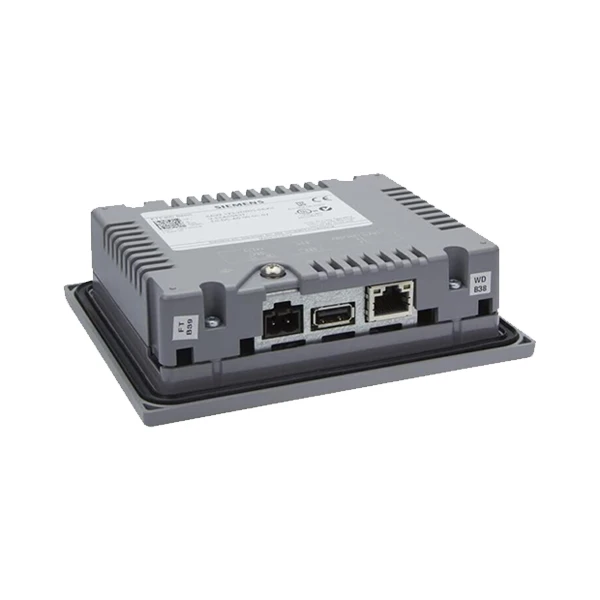
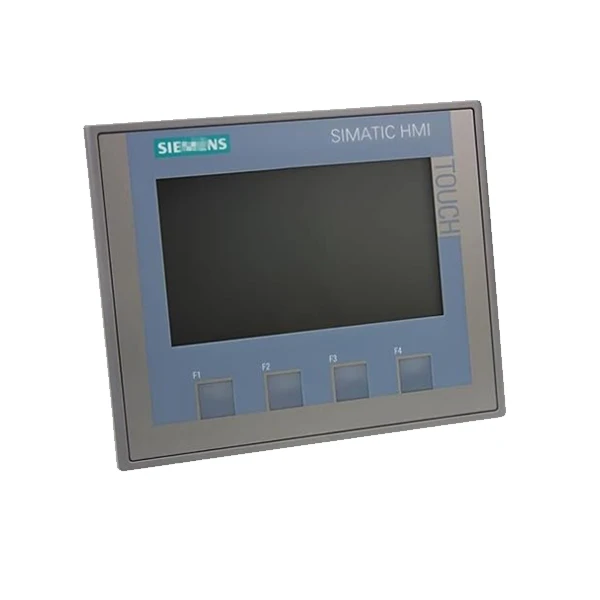
If you're in the process of choosing an HMI and PLC combination for your project, it's important to carefully consider the data transfer requirements. You need to analyze the amount of data that needs to be transferred, the frequency of data updates, and the response time required for your application. Based on these factors, you can select the appropriate communication protocol, HMI model, and PLC.
As a Siemens HMI supplier, I can offer you a wide range of products and solutions to meet your specific needs. Whether you're looking for a high - end HMI with fast data transfer capabilities or a more budget - friendly option for a small - scale project, I can help you find the right fit. If you have any questions about data transfer rates, or if you're interested in purchasing Siemens HMI products, feel free to reach out. We can have a detailed discussion about your project requirements and come up with the best solution for you.
In conclusion, understanding the data transfer rates between Siemens HMI and PLC is crucial for successful industrial automation. By considering the communication protocol, device type, and network infrastructure, you can ensure that your system operates efficiently and effectively. So, don't hesitate to contact me if you need any assistance in this area.
References:
- Siemens Industrial Automation Handbook
- Industrial Ethernet and Fieldbus Technology Literature


